
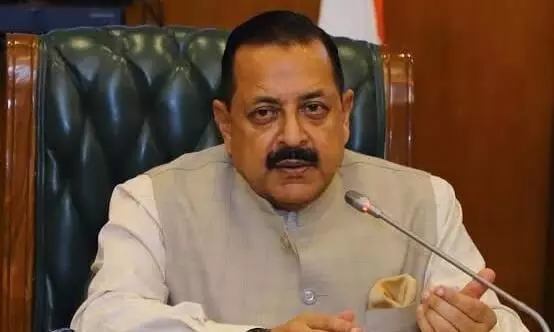

New Delhi: Artificial intelligence is increasingly shaping how patients in India access healthcare, with AI-powered chatbots becoming an early point of contact—particularly for women in underserved regions. However, Union Minister and physician Jitendra Singh has cautioned that such technologies, while transformative, cannot replace clinical judgement.
Speaking exclusively, Singh described AI as a “powerful enabler” that can enhance efficiency and precision in healthcare delivery. He stressed that diagnosis still fundamentally depends on detailed patient history and physical examination—core clinical skills that remain beyond the scope of current AI systems.
The remarks come amid a growing shift in India’s public health landscape, where mobile-based platforms are increasingly serving as the first touchpoint for care. Across several states, AI-driven chatbots such as askNivi—deployed via WhatsApp—are influencing how and when women seek medical attention, particularly in maternal and child health.
According to programme officials, these tools are not only expanding access but also reshaping health-seeking behaviour. By offering instant, personalised guidance, they help users assess symptoms, make informed decisions, and seek timely medical care. “By leveraging digital infrastructure, askNivi delivers timely and personalised behaviour-change communication to women,” said Rubiya Bano, Project Coordinator, India, askNivi.
Early evidence suggests that such chatbots are functioning as a form of pre-clinical triage, addressing long-standing barriers such as distance, social stigma, and limited awareness. Their anonymous and accessible nature is encouraging earlier engagement with the healthcare system, potentially improving outcomes.
However, experts warn of critical challenges. Concerns persist around the reliability of algorithm-driven advice, risks of overdependence on digital tools, and unequal access to smartphones and internet services. Singh reiterated that while AI can support decision-making, it cannot replace the trust, nuance, and judgement of human clinicians.
From a systems perspective, the integration of AI chatbots could help ease pressure on overstretched primary health centres by handling routine queries and preliminary assessments, allowing healthcare providers to focus on more complex cases.